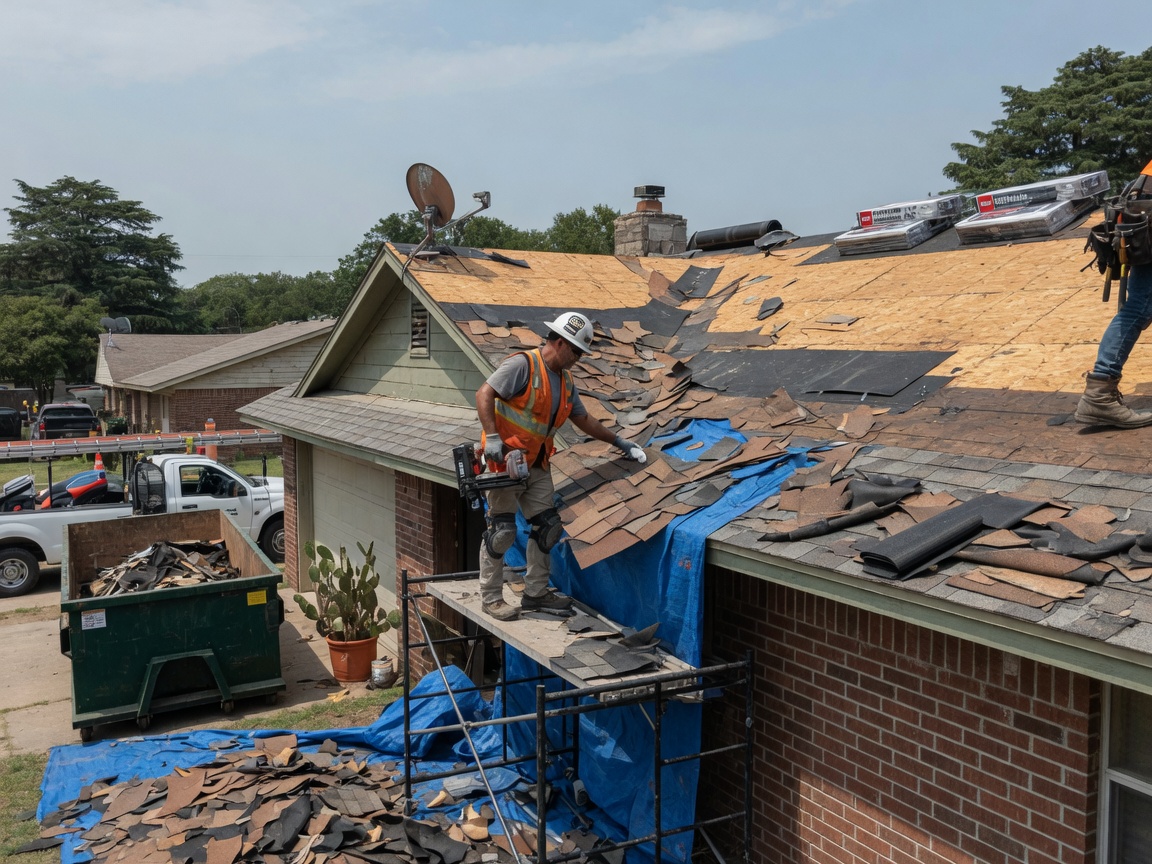
Austin's older neighborhoods such as Clarksville, Hyde Park and Travis Heights often feature homes built between the 1940s and 1970s with original decking that has seen decades of expansion and contraction from hot humid summers. When replacing roofs here, crews must check for rotted plywood caused by repeated moisture cycles and ensure new underlayment meets current Travis County wind and rain load expectations. Skipping this step leads to callbacks once the first spring thunderstorm arrives.
Metal and asphalt options perform differently under Austin's intense summer heat. Metal reflects more sunlight on exposed lots in Zilker or Barton Hills, while certain laminated shingles hold up better against UV degradation in tree-covered sections of Mueller. Proper ridge ventilation becomes critical on low-pitch roofs common in East Austin bungalows to prevent heat buildup that shortens shingle life.
Removal of multiple existing layers is common in South Congress and Westlake properties where previous owners added shingles rather than tearing down to deck. Local code requires permits for structural changes and proper disposal of old materials at Travis County facilities. Crews also watch for hidden damage around chimneys and skylights that appear frequently on homes near Lady Bird Lake.
Nearby cities like Round Rock, Pflugerville and Cedar Park share similar soil movement issues that can shift foundations slightly over time, requiring flexible flashing details at roof-to-wall transitions during replacement.
Technician insight
In Austin the thing that catches most people out with roof replacement is how quickly summer heat bakes out moisture from new underlayment on south-facing slopes in neighborhoods like Zilker, forcing crews to work in shorter morning windows before temperatures climb.
East Austin Bungalow Roof Replacement
Homeowner in East Austin reported leaks after spring rains on a 1960s house. Inspection showed two layers of shingles over deteriorated decking near the chimney. We removed both layers, replaced damaged plywood, installed new underlayment rated for humidity and finished with impact shingles plus improved ridge ventilation. The roof now manages Travis County storms without interior moisture issues.
Roof Replacement Services We Offer
✓Asphalt Shingle Replacement
Full tear-off and installation of laminated shingles rated for Austin's heat and humidity on single-family homes in neighborhoods like Hyde Park and East Austin.
✓Metal Roof Replacement
Standing seam or screw-down metal systems that reflect sunlight and reduce attic temperatures on homes in Westlake and Barton Hills with good southern exposure.
✓Tile Roof Replacement
Concrete or clay tile re-roofing that matches the style of older Travis Heights and Clarksville properties while improving ventilation and underlayment.
✓Flat Roof Replacement
Modified bitumen or TPO membrane replacement for low-slope sections on homes and small buildings in Mueller and Downtown Austin.
✓Impact-Resistant Shingle Replacement
Class 4 impact shingles installed on homes near Zilker Park and Mount Bonnell where hail and falling branches are common during spring storms.
Roof Replacement Cost in Austin, TX
| Service | Typical Range | What Affects It |
|---|---|---|
| Asphalt Shingle Roof Replacement | $9,000–$18,000 | Varies with square footage, access and layer count in older neighborhoods like Hyde Park. |
| Metal Roof Replacement | $14,000–$25,000 | Higher for standing seam on homes in Westlake or Barton Hills with complex rooflines. |
| Tile Roof Replacement | $16,000–$28,000 | Includes underlayment upgrade for homes in Travis Heights and Clarksville. |
| Additional Layer Removal | $1,500–$3,500 | Common on East Austin and South Congress properties with multiple prior roofs. |
Ranges are typical for Austin, TX and confirmed with an exact written quote before any work starts.
How it works
- 1
On-Site Assessment
Measure the roof, check deck condition and note access challenges specific to the neighborhood such as narrow streets in Clarksville or steep driveways in Westlake.
- 2
Material and Permit Planning
Select shingles or metal suited to Austin humidity, pull required Travis County permits and schedule disposal at local facilities.
- 3
Tear-Off and Deck Repair
Remove existing layers, replace damaged plywood and install new underlayment and drip edge before weather exposure.
- 4
Installation and Final Inspection
Apply new roofing with proper ventilation, flash all penetrations and walk the roof with the homeowner to confirm details.
Pricing
Upfront quotes based on roof size, pitch, number of layers and material choice for Travis County homes.